The Sobering of Society: The Effect of the Anti-Alcohol Movement on the Family
In 1985, when Gorbachev launched his anti-alcohol campaign, his goal was to create a better society by limiting the consumption of alcohol. He took extreme measures to reduce alcohol consumption, such as limiting shops that sold alcohol, destroying vineyards, and reducing the production of alcohol significantly.
Certainly Gorbachev’s campaign had several positive effects. The state saw a significant decline in mortality rates, among adults as well as newborns, and a decline in alcohol related factory accidents. However, the anti-alcohol movement was widely rejected by members of Soviet society. Those who had been heavy drinkers turned to more dangerous substances, and moonshine production was at an all time high. Organized crime became more common, and many fought back against the strict laws.
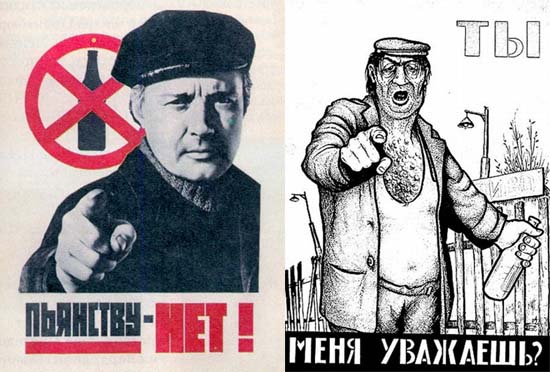
It was clear that alcoholism in Soviet society was incredibly destructive to the family structure. Divorce rates were high, as well as rates of child abuse and domestic violence. In addition, alcoholism affected mainly males. After reading several accounts of how the anti-alcohol campaign affected hard drinkers that were men, I thought it would be interesting to analyze this event from a female perspective. Did women support this campaign, or rebel against it as so many men did? Would they be in support of their husbands and family members who were struggling with addiction or were they eager to see a society free of alcohol?
After looking through several articles in the Current Digest of the Russian Press, I was able to read several firsthand accounts of women and their position on the anti-alcohol movement. If one thing was clear, it was that these women were incredibly supportive of the anti-alcohol movement. In a 1985article titled “Alcohol is the Enemy of Society: No Indulgence!” several women stated their passionate concern for the dangers of Alcohol and how it plagued their families. They spoke of the “brotherhood of drunkards” and how much their families suffered from living with alcoholics. It was clear that their stance was similar to Gorbachev’s: a no-tolerance, no-lenience policy that cut off alcohol completely instead of drawing the process out.
In addition, after reading a study called “The Impact of the 1985-1988 Russian Anti-Alcohol Campaign on Child Health,” I learned of the significant effect that suppressing parental access to alcohol had on the long term health of a child. Studies on children born during this era of prohibition were significantly healthier, both at birth and in the long-term. It was clear to many that alcohol posed a significant threat to the survival of it’s people and of society as a whole.
To this day, Russia is still struggling with over-consumption of alcohol, and many wonder if the anti-alcohol movement had a significant part in the behaviors of Russians today. From an economic perspective, Gorbachev’s anti-alcohol movement was wildly unsuccessful, and there certainly were ways that it could’ve been handled differently to have a more long-lasting effect. It was clear Gorbachev was only trying to combat the turmoil that alcohol was causing for many Soviet families; however, instead of making all alcohol disappear, the campaign should’ve moved slower in order to gradually change societal habits. Economic issues aside, it is certainly interesting to see and read firsthand the effects that the anti-alcohol campaign had on the family—both women and men.
Sources
Balan-Cohen. Andreea. “Sobering Up: The Impact of the 1985-1988 Russian Anti-Alcohol Campaign on Child Health”. December 2008. http://conference.nber.org/conferences/2009/HCs09/balan.PDF.
Boroznova, N. “ALCOHOL IS THE ENEMY OF SOCIETY: NO INDULGENCE!” Current Digest of the Post-Soviet Press, The, No.21, Vol.37, June 19, 1985, page(s):13-14.
https://dlib.eastview.com/browse/doc/19986564.
Pleshevenya, V. “The Life of Sober Alcohoholics.” Current Digest of the Post-Soviet Press, The, No.52, Vol.16, January 20, 1965, page(s):27-28.
https://dlib.eastview.com/browse/doc/13769352.
“Posters of the Anti-Alcohol Campaign.” Seventeen Moments in Soviet History, 11 Jan. 2016, soviethistory.msu.edu/1985-2/anti-alcohol-campaign/posters-of-the-anti-alcohol-campaign/.
World Health Organization Regional Office for Europe. “Policy Briefing: Interpersonal Violence and Alcohol in the Russian Federation.” Global Campaign for Violance Prevention. http://www.euro.who.int/__data/assets/pdf_file/0011/98804/E88757.pdfhttp://www.euro.who.int/__data/assets/pdf_file/0011/98804/E88757.pdf
Socialism and the Downfall of the Shadow Economy
Socialism played a major role in every government decision made during the Brezhnev era. While the Khrushchev era saw a lot of regrowth and reform in various areas, Brezhnev focused on centralizing the economy. A series of economic reforms were made during the Brezhnev era, all designed to make the economy more efficient, but more importantly to adhere to socialist ideals. Certain economic activities were limited because they did not coincide with the socialist way, and many commodities were forbidden as well. Because the law prohibited certain economic activities, citizens became involved in an underground economy, where they would carry out essential economic activities through the black market and “middle men.” Goods were smuggled into the country or produced after-hours in underground facilities. Soon, this “shadow economy” grew to a level where participation was necessary for every citizen. Households were in need of supplemental income, and shortages of necessary goods forced individuals to turn to the black market. By the year 1980, virtually every citizen in the USSR had found themselves involved in this underground economy. And in the middle of it all was Brezhnev, who was deeply involved himself.
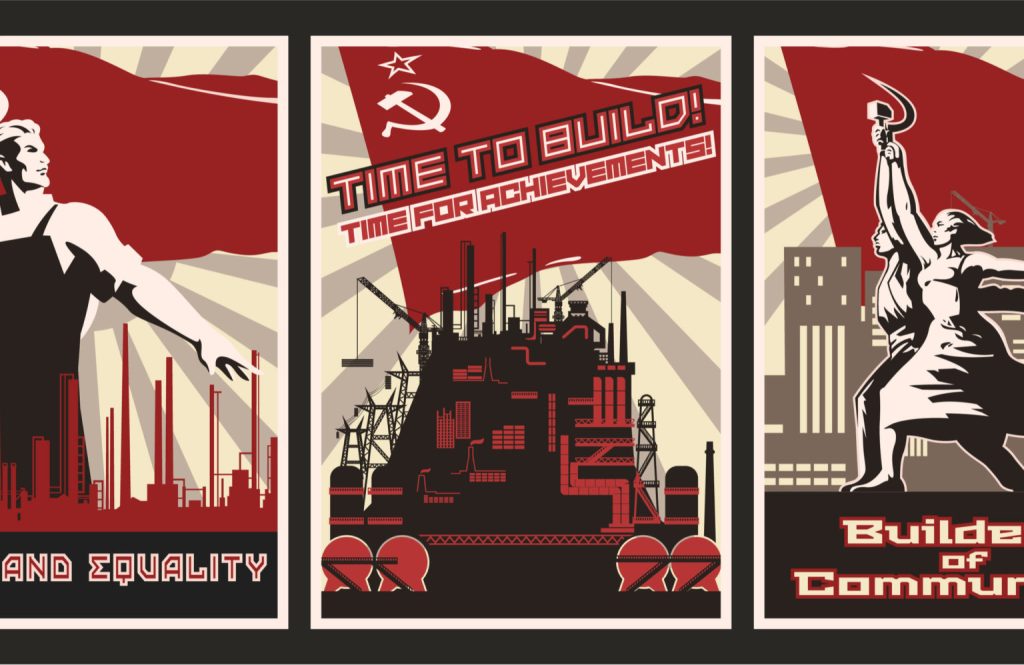
The system that existed during the Brezhnev era was doomed for failure because it was set up to serve the political and ideological interests of the USSR, and not for economic efficiency. It was clear that the system in place was doomed for failure. The laws in place only caused black market activity to increase, as the desire and demand for certain goods did not go away. In addition, in order to create the equality among citizens, prices were fixed to ensure all citizens would have the same accessibility. With the price below equilibrium, demand far outweighed supply and certain goods became scarce, therefore further encouraging black market activity.
The way the state originally approached controlling this illegal activity was by considering it an attack on socialism, and that is why they failed to control it. The second economy certainly contradicted socialist ideologies, such as income equality, but what the state failed to realize was that there were deeper issues that, in order to be solved, would have threatened the whole structure of socialism. This system became rooted entirely in Soviet life, and proved that the laws put in place were not serving the people. But the shadow economy represented more than just ineffective laws—it was a reflection of much deeper political, economic and structural issues within the Soviet system. It was the Soviet Union’s socialist ideals that led to the creation of this underground economy, and the effects of the shadow economy represented the repercussions of an extremely ineffective system of socialism.
In reality, the second economy was extremely necessary as it created alternative sources for the growing needs of the people, yet the overall effect of the second economy was clearly a corrosive one, and it only proved that the socialist system was not viable for the economy that needed to be in place. It is now almost 30 years since the collapse of the Soviet Union and the start of a new economic structure that is still fighting to overcome the faults of the Soviet’s socialist system and the Brezhnev era. Certainly the shadow economy left a legacy for Russia’s future, and proved that an economy is doomed for failure if governed by socialist ideals.
References:
“Underground Economy.” Seventeen Moments in Soviet History, 18 June 2017, soviethistory.msu.edu/1980-2/underground-economy/.
Rutgaizer, Valeriy. “The Shadow Economy in the USSR.” The National Council for Soviet and East European Research. 34, February 1992. https://www.ucis.pitt.edu/nceeer/1992-900-03-Rutgaizer.pdf
Mostovshchikov, S. “Timely Interview: THE ‘SHADOW’ ECONOMY”. Current Digest of the Post-Soviet Press, The, No.41, Vol.40, November 09, 1988, page(s):11-11
The Space Race and the Promises of the Khrushchev Era
April 19, 2020

After Khrushchev took power in 1963, there began a steep process of political, cultural and economic reform in Soviet Society. Khrushchev made it a point to denounce Stalin’s dictatorship and so came the beginning of the Thaw, a period of liberalization, relaxation and rehabilitation. Following the era of Stalin, this reform brought several promises for those who had been repressed under his brutal regime. One large achievement included advancements in the Soviet Space program as they competed with the United States. This “space race” served as one area of competition between the US and the Soviets that fueled the Cold War rivalry. Sputnik was launched in 1957, and was the first man-made object to be placed into the Earth’s orbit. In 1961, Soviet test pilot Iurii Gagarin was the first human to successfully venture into space.
Certainly the achievements made by the Soviets during the Space Race were very impressive. What is most important to assess, however, is how the Soviet space program fit with the broader concept and dynamics of de-Stalinization. There are several common themes of the Khrushchev era, including an increase in freedoms, advancements and new approaches to technology, and an effort to create a more transparent government. The Space Race addressed elements of each of these themes. First of all, the Space Race was a major advancement in the field of national security for the USSR. The launch of Sputnik allowed the Soviet Union to research things they had never been able to before, and the technology developed during that time allowed for a more advanced society. The Space Race embodied the Soviets’ overall approach to technology, and was made a top priority along with the military ballistics program. Secondly, the launch of Sputnik was a symbol of superiority over the United States in the midst of the Cold War. Both the launch of Sputnik and the first cosmonaut represented major victories in technology and the Space Race against the United States, and led to an optimistic Soviet society. Khrushchev worked hard on the domestic front to raise the standard of living for the Soviet Union, and these advancements certainly contributed. What was most important about the Space Race was that it reinforced the belief for the Soviet Union that science and technology were important, and that they had the power to help humans triumph over the world. Over sixty years later, we look back on the launch of Sputnik as the beginning of a series of technological advancements that led to everything we know about space today. The achievements made during the Space Race were a very important part of the era of de-Stalinization, because they embodied Khrushchev’s goals as well as the themes and concepts that triumphed during that era.
Citations:
“N. S. KHRUSHCHEV’S TALK WITH FIRST COSMONAUT YU. A. GAGARIN.” Current Digest of the Post-Soviet Press, The, No.15, Vol.13, May 10, 1961, page(s):3-6.
“First Cosmonaut.” Seventeen Moments in Soviet History, 18 June 2017, soviethistory.msu.edu/1961-2/first-cosmonaut/.
“Launch of Sputnik.” Seventeen Moments in Soviet History, 21 May 2017, soviethistory.msu.edu/1956-2/launch-of-sputnik/.

